
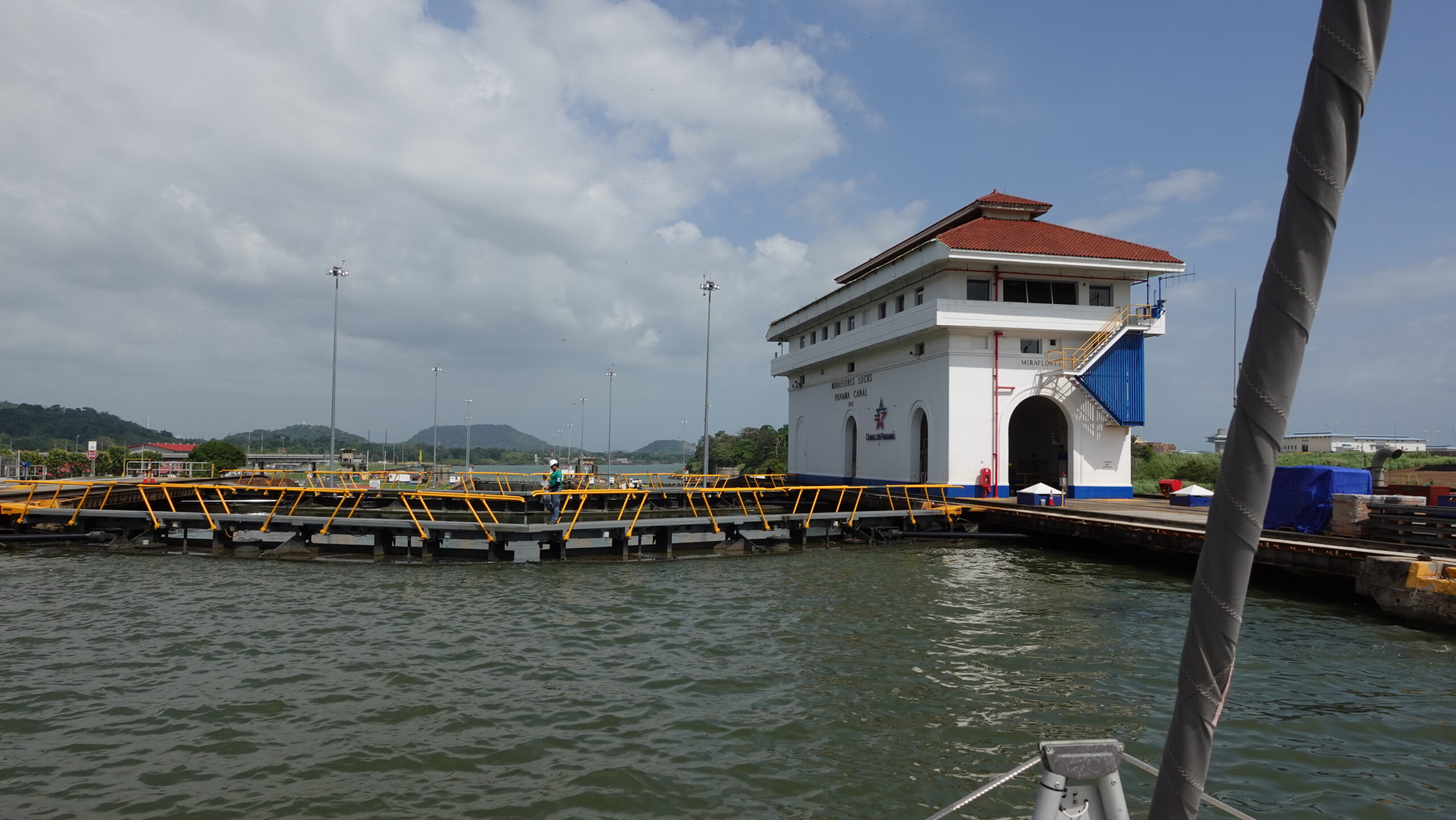
Driving our catamaran through the Panama Canal’s locks was a unique experience, so here’s the full story of our two-day crossing including everything you need to know about going through the Panama Canal on your own boat.
Before going through the Panama Canal we needed to book SV Liger in for a small craft transit. I covered all the steps we took to organize our Panama Canal transit in my last post; we did the entire thing ourselves, without the help of an agent.
Day 1: Leaving the Caribbean behind
The big day began with a leisurely wake-up in Portobelo, about 19 nautical miles from Colon. After eating breakfast and raising the anchor, we casually motored down the coast while taking in our last views of the Caribbean Sea.
On arrival to the Panama Canal sailboat staging area, which is just outside Shelter Bay Marina, we had some lunch then dropped the tender and headed in to collect our line handlers. For the journey we’d chosen to hire Tito, an experienced line-handler who’s been through the Canal many, MANY times. He also provided an assistant and all of the required fenders and lines.
By four o’clock in the afternoon we were waiting, lines and fenders ready, for our assigned Panama Canal Transit Advisor to board. There was a brief mix-up when the pilot boat dropped off the wrong advisor, but the skilled driver quickly swapped them out.
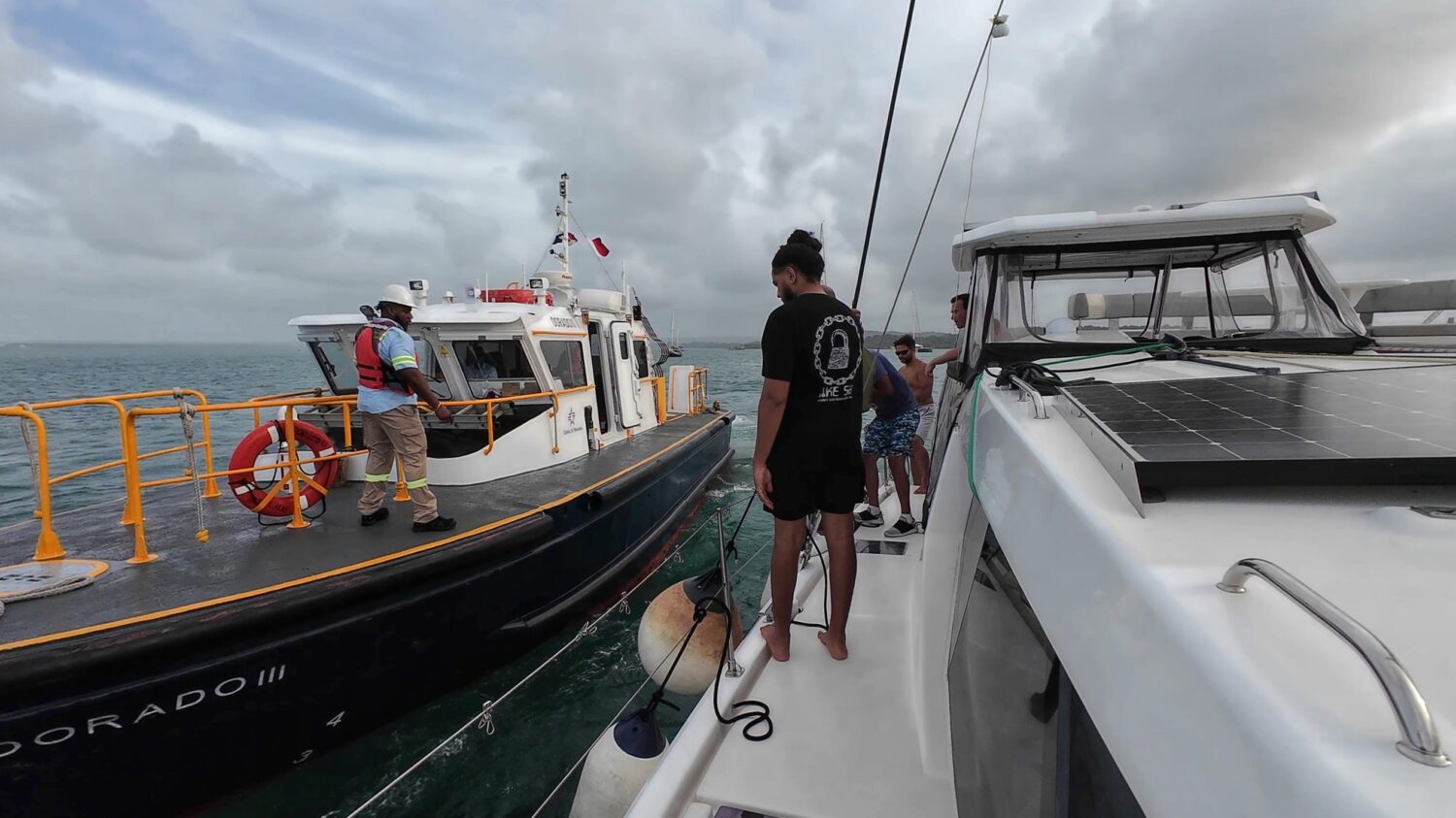
The Advisor is the Panama Canal’s representative aboard, and is required for all sailboats transiting the Canal. As the name suggests, they are there to advise you – they don’t touch the helm. He directed us when to lift anchor, and guided myself and Trent as we took turns driving SV Liger toward the first set of locks.
After passing under the Puente Atlántico bridge we were asked to slow down as much as possible. The cargo ship ahead of us was almost as wide as the lock chamber itself. Trying to fit this boat in, which was the maximum size allowed, delayed our entry process. As a result, we had to hold position in the channel for over an hour, maneuvering against the wind and currents. We ended up driving back toward the bridge and drifting forward several times while waiting for the all-clear.
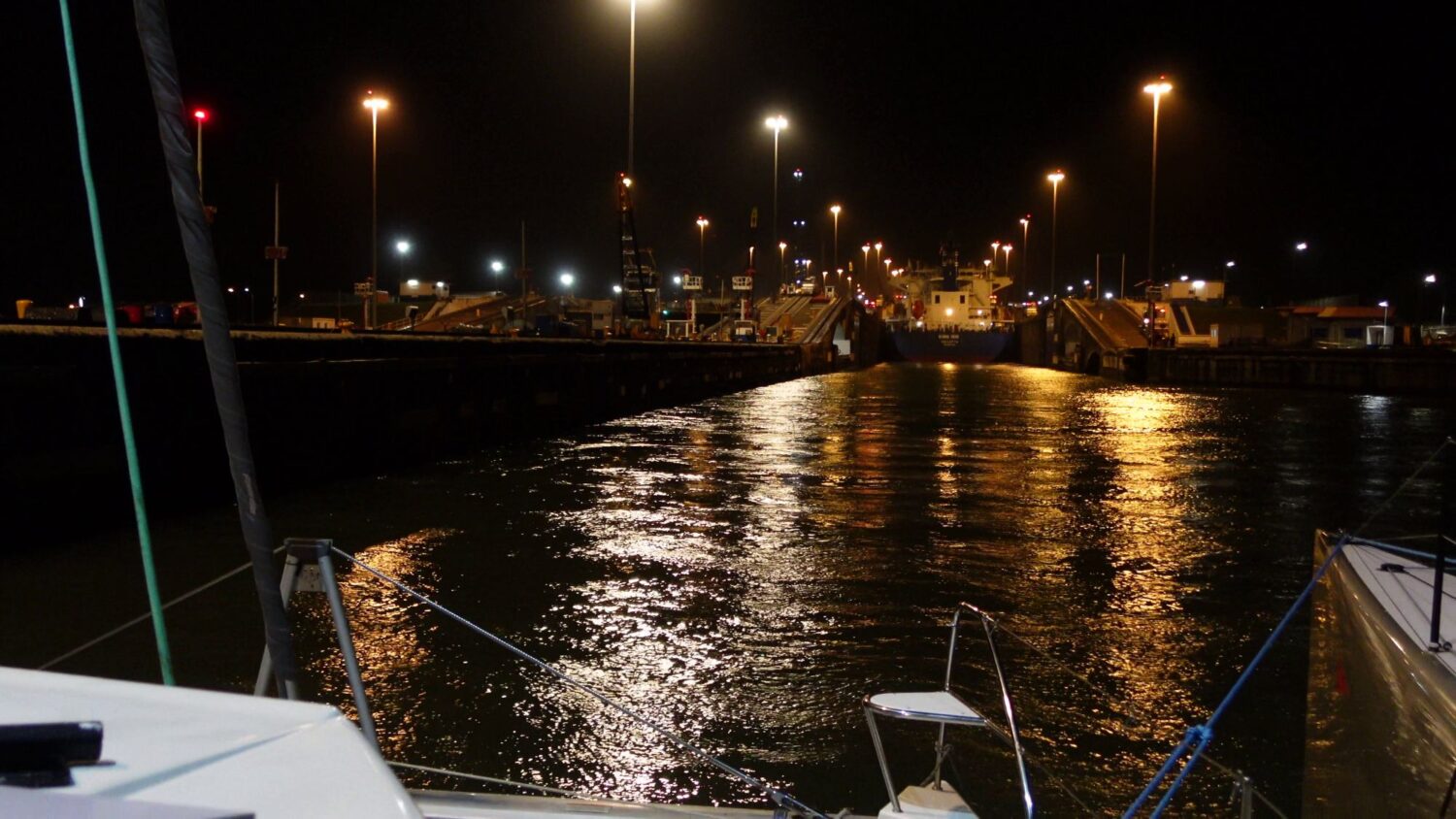
Locking through nested in the first chamber
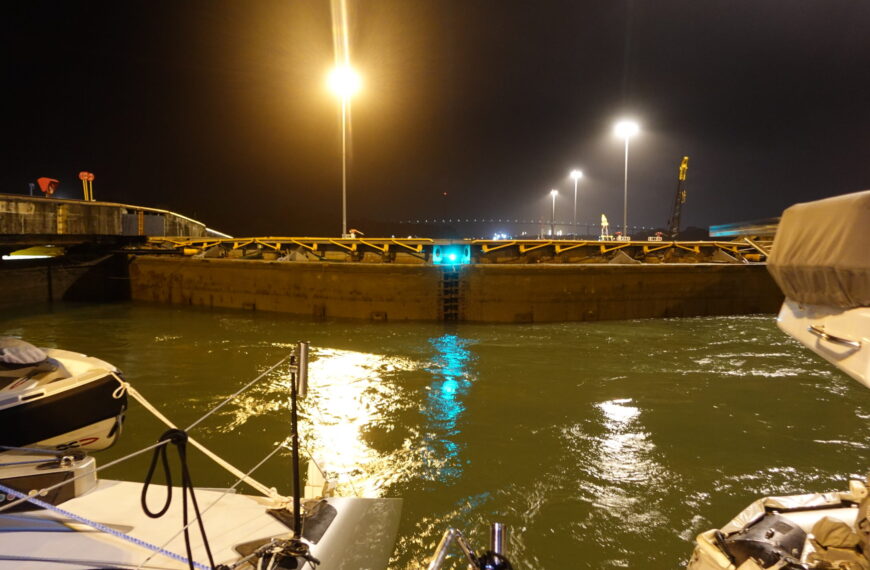
When the locks were finally ready, the Advisor directed us to tie alongside a larger catamaran that was also transiting. We placed heavy fenders between our hulls and used multiple spring lines to secure the two catamarans together. Under the experienced direction of Tito, the nesting process went incredibly smoothly. Trent was able to focus on driving SV Liger, while Tito oversaw the lines and I checked the fender positioning. Once secure, we motored into the first lock chamber together.
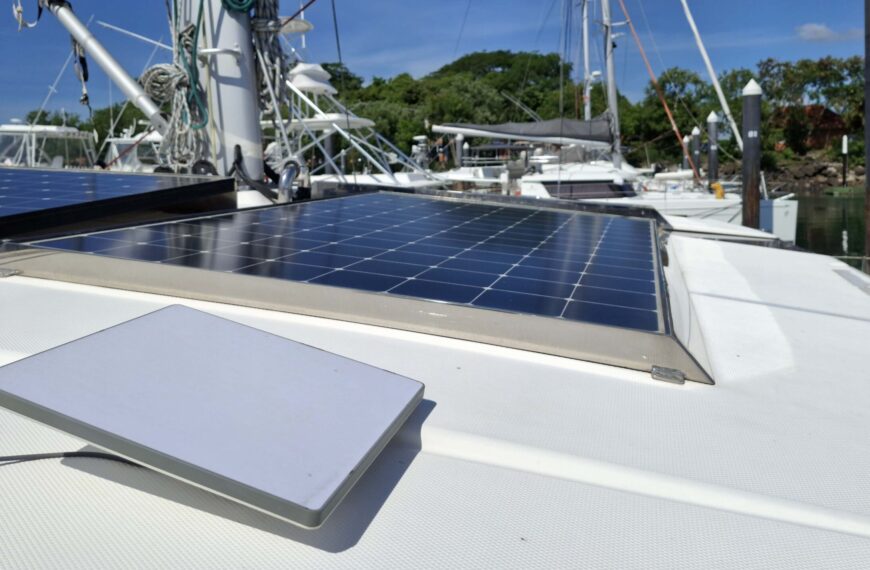
As we entered the chamber, the shore-side canal workers threw messenger lines with a weighted rope ball at the end, known as monkey’s fists, down to our deck. The monkey’s fists are INFAMOUS, heavy enough to smash a solar panel if you aren’t careful. Despite asking them throw toward the bow, one of the heavy knots still missed our solar panels by just a few inches. I was standing nearby at the time and just about had a heart-attack thinking it had hit one!
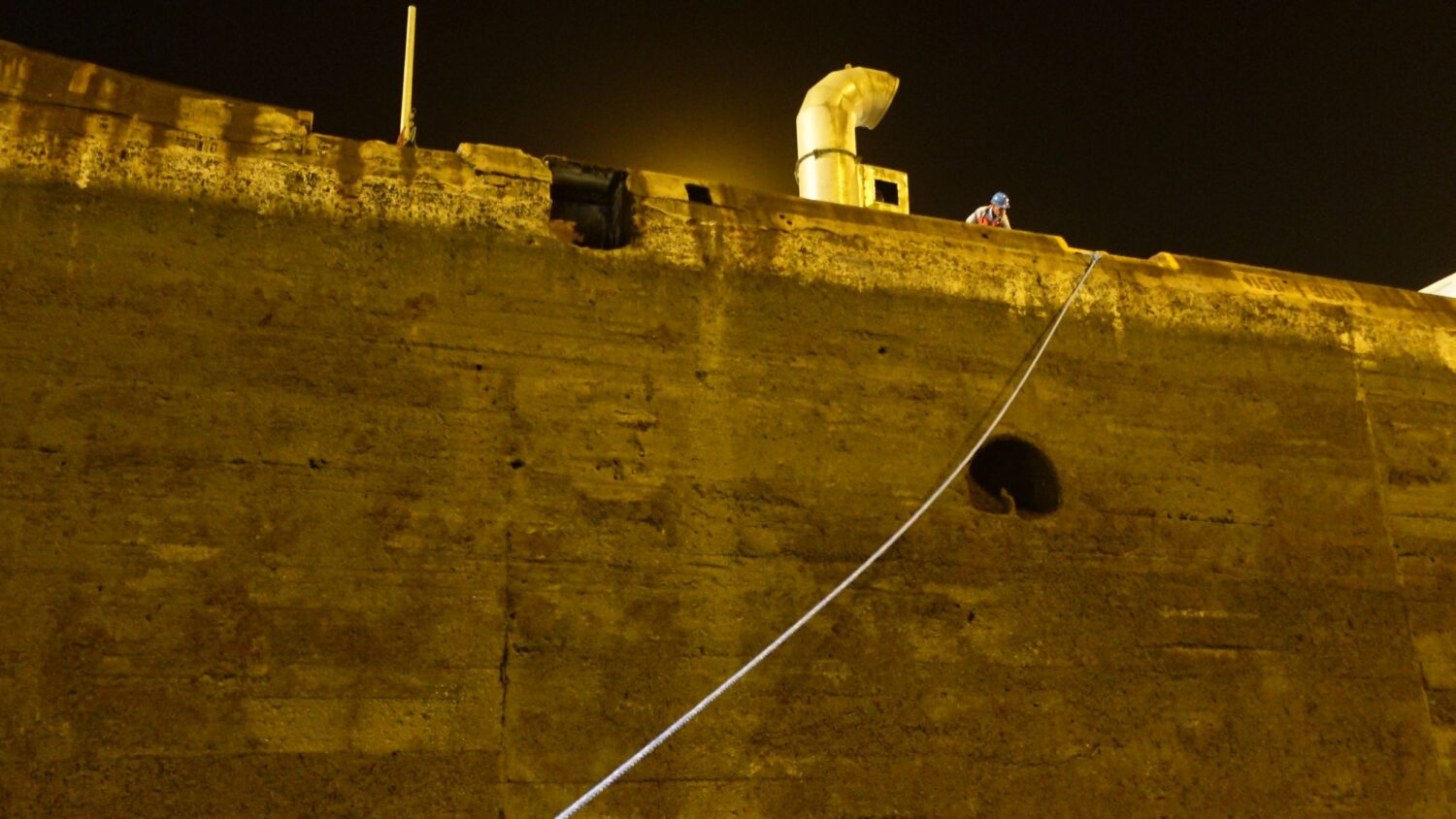
Once the lines were secured, the massive lock doors closed behind us, marking the end to our Caribbean sailing journey. As the water levels began to rise the surface became turbulent, and the line handlers had to be careful to pull in the ropes as they slackened with the rising water. I was genuinely surprised by how fast the water level increased, taking just 10 minutes to raise us up.
Minutes after the water reached the high point, the lock doors in front opened and the cargo ship pulled forward. Once given the signal by the advisors, we motored forward as well, while the canal staff walked the lines along the lock walls.
Three locks in a row
This process repeated as we went through the next two locks. Fortunately, because we were nested to the other catamaran, we only needed to manage the lines on our outer side. Tito and his assistant took care of everything, which allowed our crew to relax and really take in the experience.
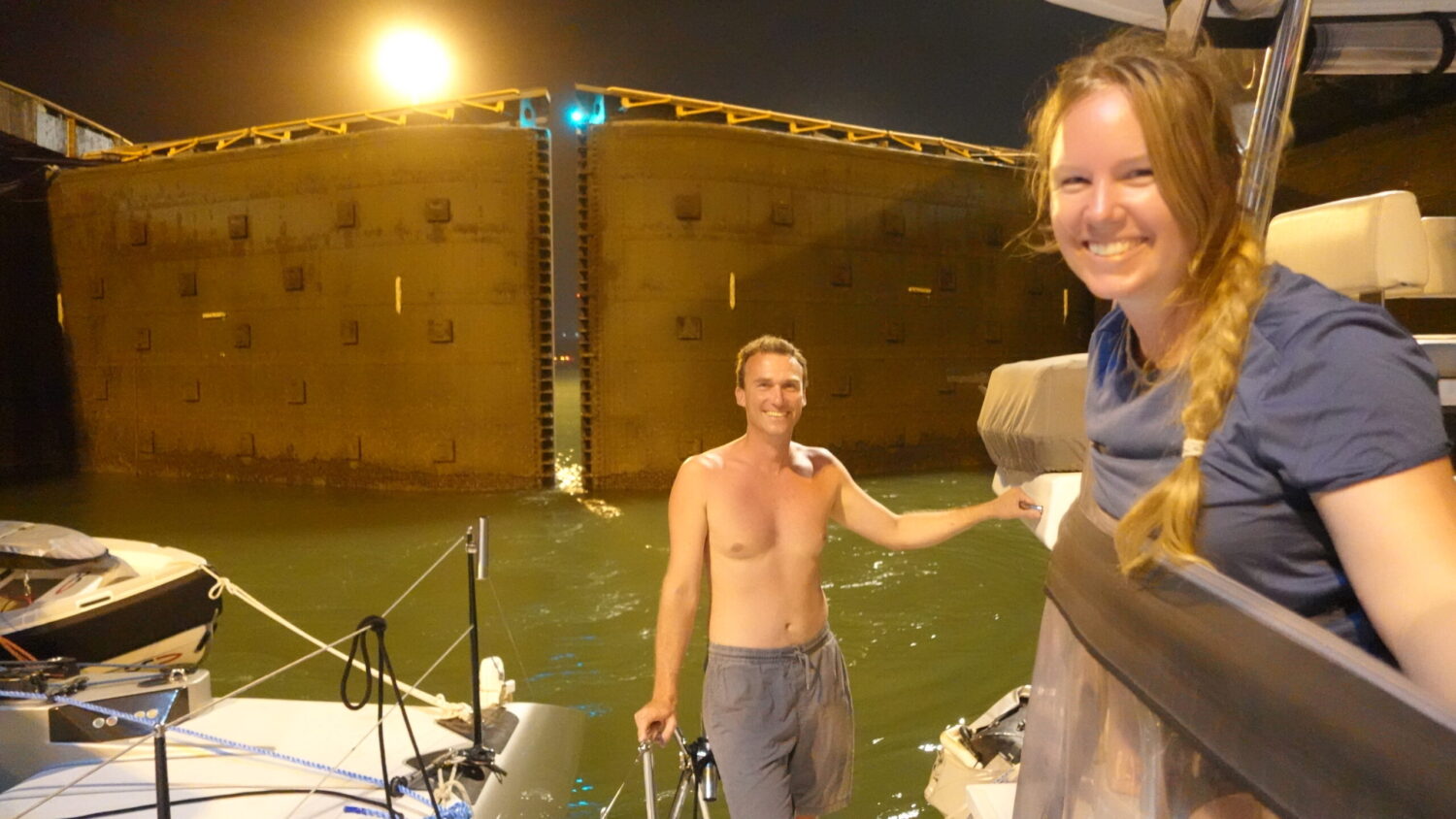
As we were rising up in the last lock I started the dinner preparations, so I could feed our advisor before he had to go. Tonight was Spaghetti Bolognese, which he admitted was one of the most common meals cruisers provide. The other was Chili Beef.
At the end of the final Atlantic lock, we motored forward a little into Gatun Lake then separated from the other boat.
A bumpy night on Gatun Lake
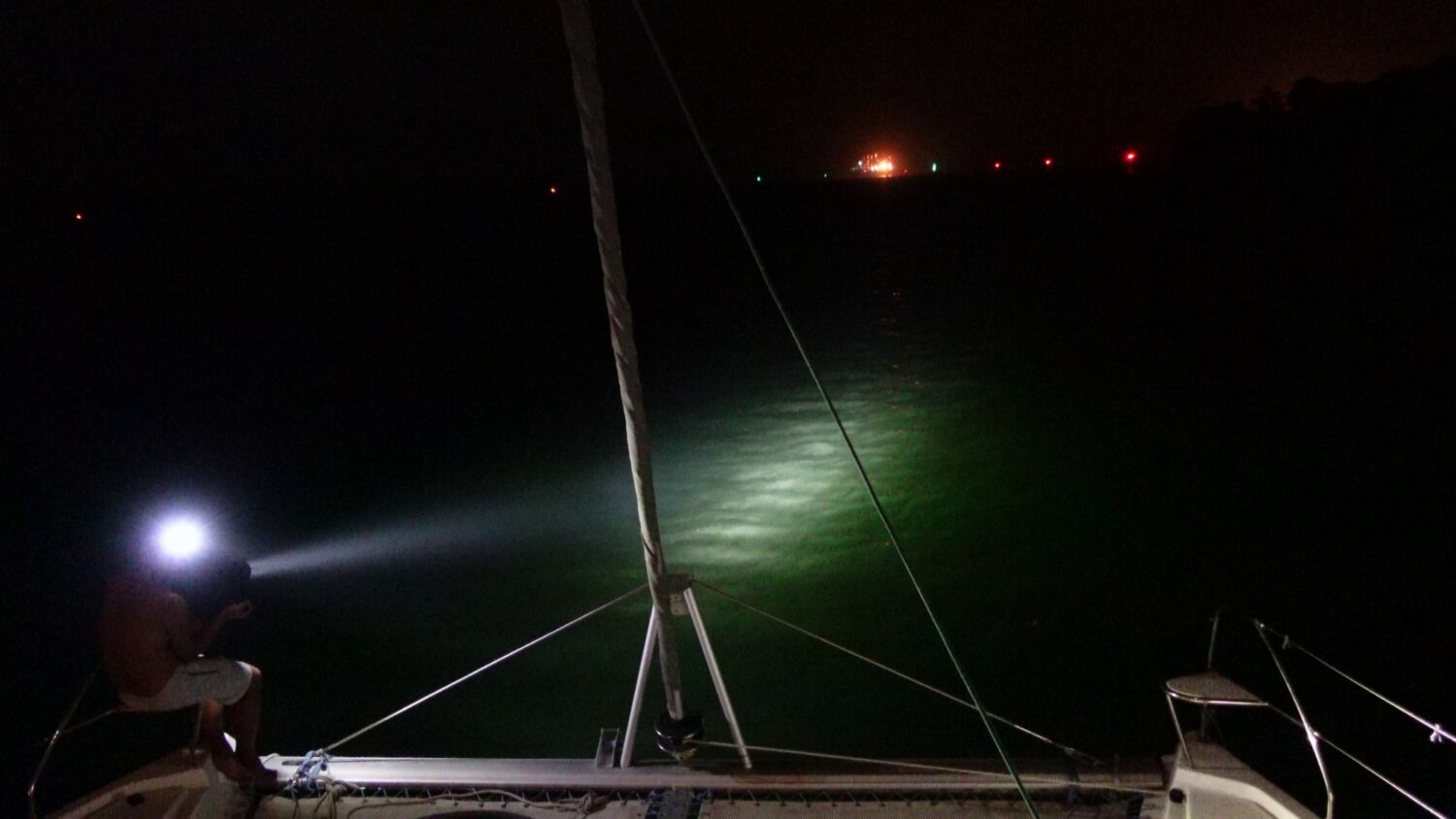
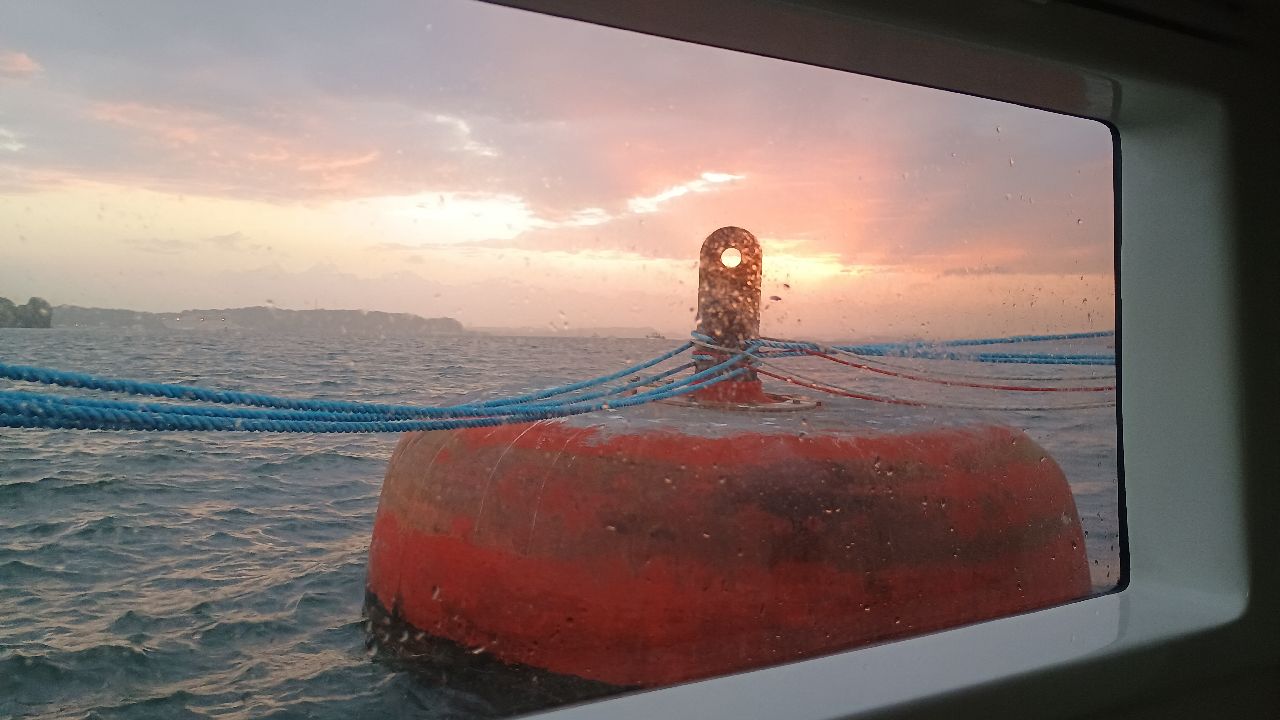
By this time it was almost 11 pm. In the dark of night we motored to the designated Gatun Lake mooring buoy and secured SV Liger. Unlike the moorings most cruisers would be used to, these ones are giant concrete buoys, so Liger was hung off it sideways with all of the fenders aboard lined up the hull. Shortly after the pilot boat arrived to collect our Advisor, while the crew washed, ate and headed to bed.
Tito and his assistant chose to sleep outside, which makes sense as Panama is generally stiflingly hot, even at night. He also likes to check on the boat and mooring during the night, to make sure everything is okay.
Knowing Tito was keeping an eye out, the night on the lake was mostly peaceful. We did have one rude awakening when Liger was suddenly hit by a beam wake that rolled the boat hard enough to wake everyone up. After sleepily looking out the window and seeing our mooring was fine, I rolled over and quickly passed out again.
Day 2: Crossing Gatun Lake
The next morning I mass produced bacon and egg burgers while everyone else got the boat (and coffee) ready, in time for our second Advisor to be dropped off around 8.00 am. Shortly after he boarded, we began the 4 hour motor across Gatun Lake. The traffic lanes are well marked on the charts and by buoys, and our advisor directed our speed. Part of his job was managing our timing to ensure we arrived at the Pacific locks exactly when the workers were ready for us.
As we came into the final stretch of water before the Pedro Miguel Locks, we took a lesson from yesterday’s close call with the monkey’s fist. Sunbeds, interior and exterior cushions and even bed pillows and blankets were used to cover the fragile panels and our saloon’s glass windows, which turned out to be an excellent decision – one of the thrown monkey’s fists that afternoon missed our panels by only two inches!
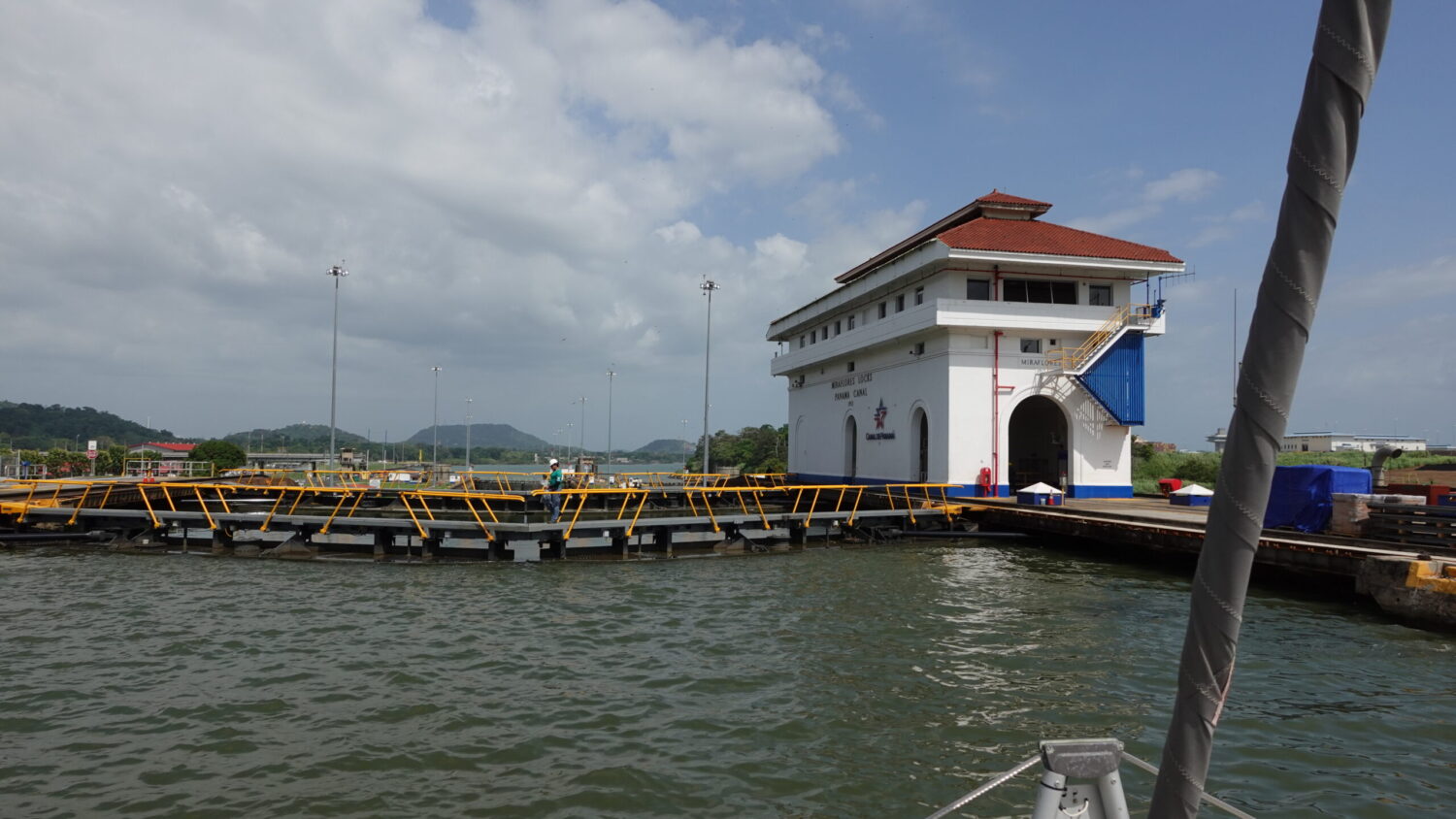
Pedro Miguel and Miraflores locks
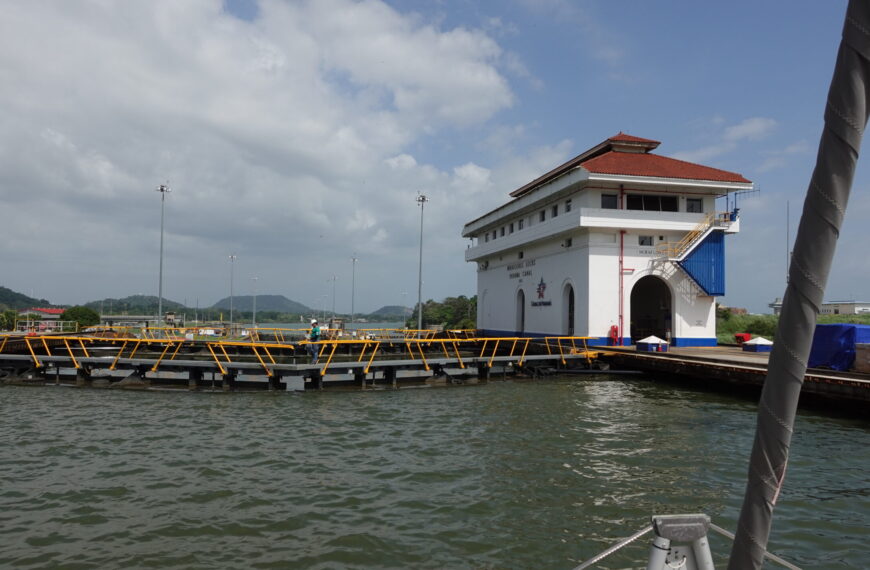
Unlike the day before, we were transiting this section of the Panama Canal alone. During our approach to the lock, Trent guided SV Liger right then left to make it easier for the Panama Canal staff to throw the monkey fists. This was a maneuver he had to complete twice, because the Miraflores Lake between the Pedro Miguel Lock and Miraflores Locks is too wide for the guide lines.
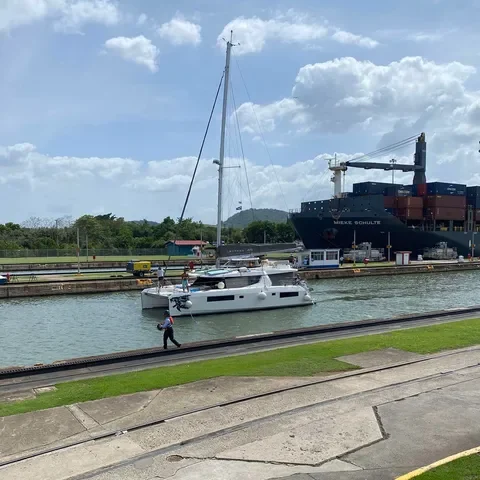
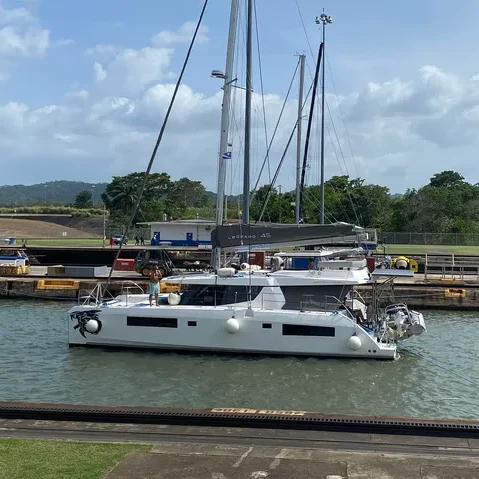
Being positioned center-chamber meant all four line-handlers needed to be active. Admittedly, I was nervous about being able to control the lines, but Tito stepped up again and kept everyone calm and organized. He took charge of the rear port line, watching Lukasz on the port bow and me on the starboard rear. This allowed us to let the lines out smoothly and evenly, as the water levels dropped inside the chamber.
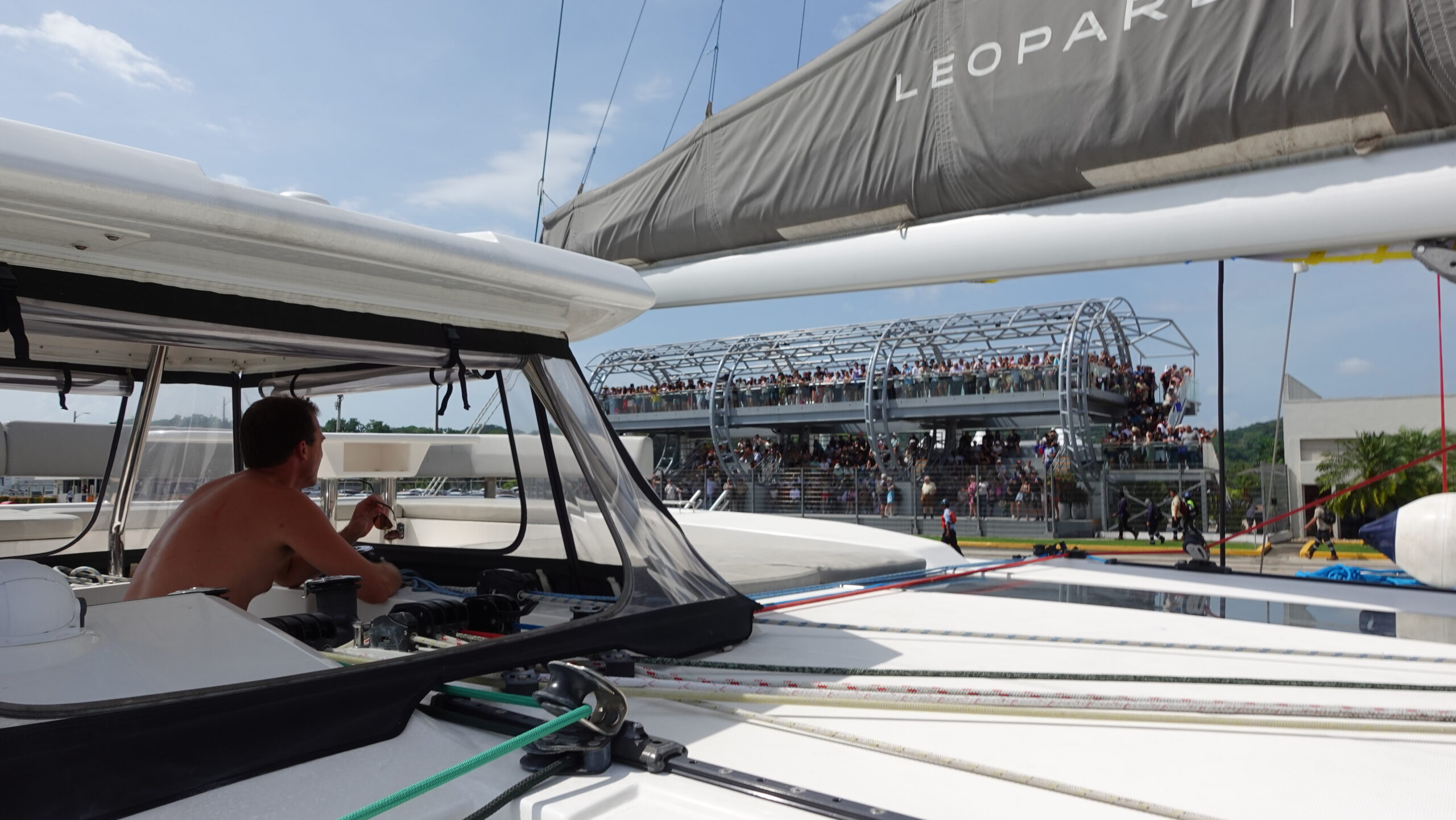
The final stage of our Panama Canal transit took us through the famous Miraflores Locks, which sit directly in front of the public viewing platform. Knowing we were on display, I taped a large sign to the boom asking the tourists shore-side to take photos of SV Liger and share them with us. Happily, several people saw the sign and later sent us some great photos of our boat inside the lock.
After the final gates opened, we motored out with a three-knot current to be mindful of, and headed toward the Pacific.
Entering the Pacific Ocean
Motoring out of the final lock required more focus than anticipated, as we merged behind a massive cargo ship coming out of the parallel canal lane. We kept our speed very slow and followed the track line out past the Bridge of the America’s, until we reached the pilot station at Amador. There, the pilot boat arrived to pick up our Advisor, and we motored the short distance to the La Playita anchorage.
After dropping Tito off at La Playita Marina, we sat down to celebrate with a cocktail; five years after leaving Australia, we’d finally made it to the Pacific Ocean.
Transiting the Panama Canal in a sailboat
Transiting the Panama Canal is something we’ll never forget. While the locks can be intimidating, having the right line-handling crew made a huge difference for us, and we couldn’t be happier with how the experience went.
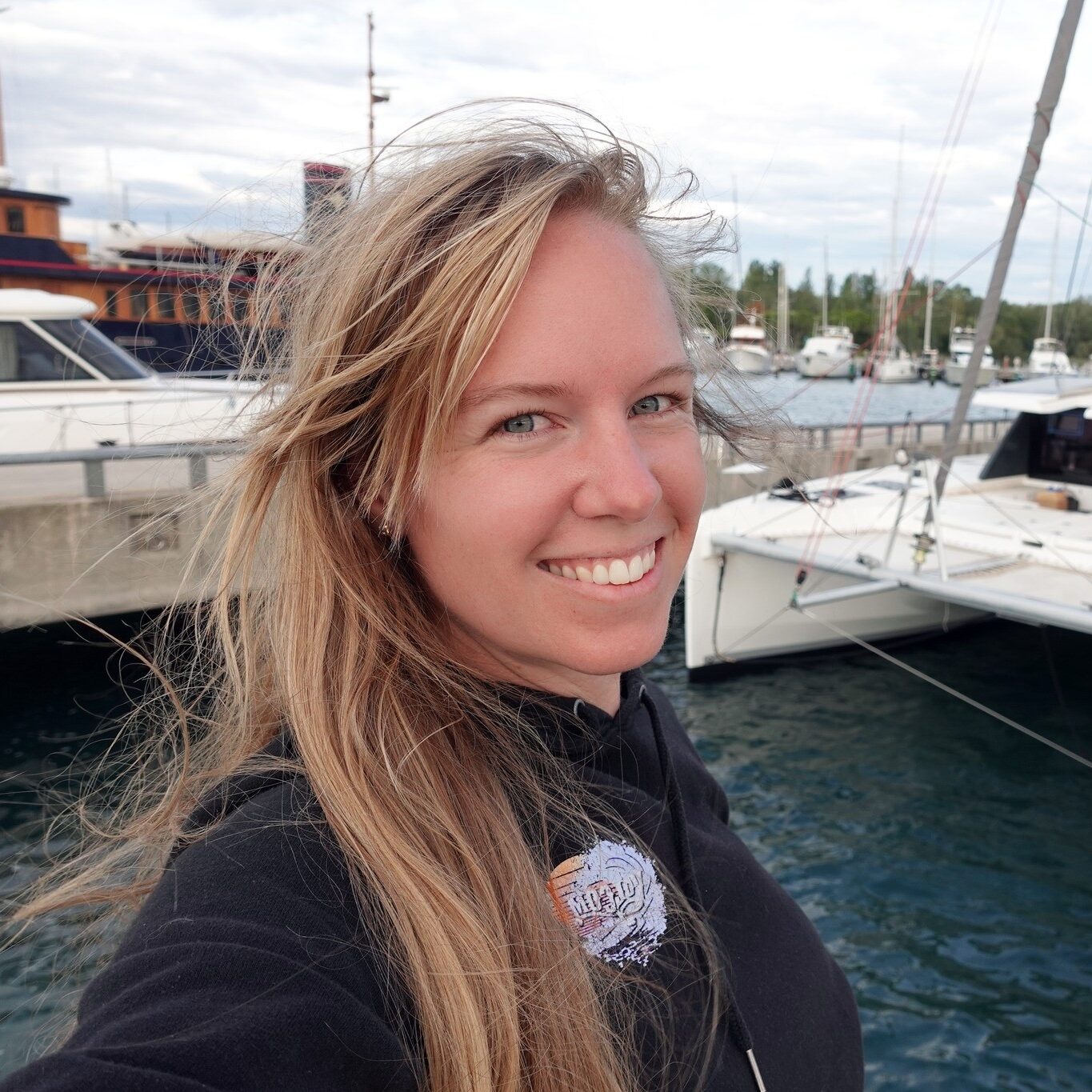
One of the creators behind Travel Sketch, Telicia lives full-time aboard SV Liger. She’s a freelance writer who’s worked with a range of international companies, and serves as social media coordinator and magazine editor for noforeignland. With the Med and Caribbean done, she’s charting a course through the Pacific and Asia.


Leave a Reply