

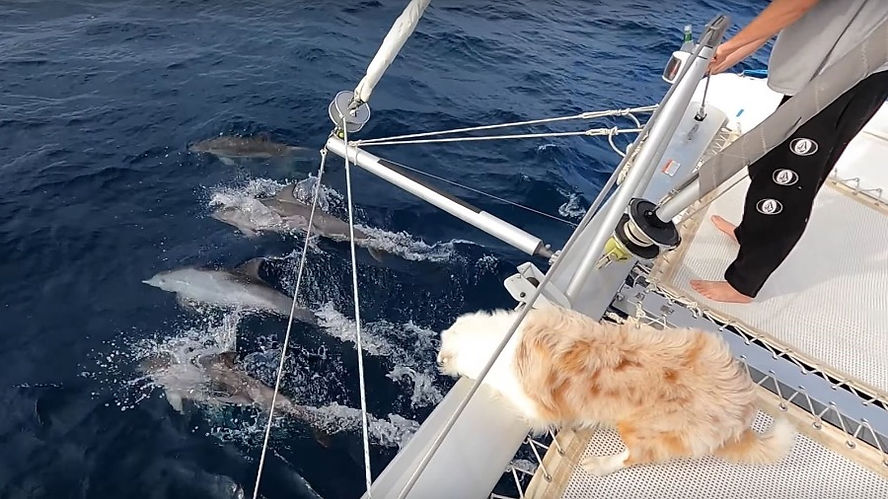
Having spent the last few years traveling the world with our dog Rose at our side, a question I’m often asked is; How hard is it to sail with a dog to different countries?
It’s a complicated topic, but to help, here’s a basic overview of what you need to do, breaking down topics like pet importation, passports, vaccinations and managing health records.
Basics of international pet travel#
Around the world, each country has their own rules governing the importation of live animals, including pets. The tests, vaccinations and treatments needed to enter can vary, and there may be quarantine periods that apply.
As part of the legislation, there’s usually a definition for which animals the country even considers to be pets. That definition can vary. For example, Australia accepts that certain cats, dogs, horses, birds and rabbits are pets, while the European Union rules only refer to cats, dogs and ferrets. Some Caribbean islands only recognize cats and dogs.
When you start trying to navigate moving your pet to another country, there’s three main things to check to find out whether they’re eligible for importation.
- Is the species considered a pet?
- Is the breed allowed to be imported?
- Can pets be imported from the country you’re planning to depart from?
That third point can be tricky to manage depending on where you want to go. For example, as Australians we can’t fly Rose home from Trinidad & Tobago, she’d have to spend 6 months in an approved country first.
Pet importation requirements#
As mentioned, the pet importation requirements vary country to country. As a result, you’ll need to research each of your destinations individually to find out what is required. Usually you need to get some form of import permit, which is issued once you prove your pet meets the requirements.
Two of the most common things we’ve been asked for are proof of a current rabies vaccination and microchip number, with the microchip needing to have been implanted before the rabies vaccine was given.
Here’s some of the other things countries have requested include:
- Rabies titer test
- A vet or government vet issued health certificate
- Vaccinations (e.g. distemper, adenovirus, parvovirus)
- Disease tests (e.g. leishmaniasis)
- Internal and external parasite treatments administered by a vet

Where to find pet importation requirements#
The best source of information about pet importation requirements is a government website for the place you’re visiting. These sites can sometimes be obscure to find which is where blogs from past visitors come in handy. I’ve shared write ups of the places we’ve been, detailing our experiences and sharing direct links and contact details for the relevant authorities.
Process to import pets#
Based on my experiences sailing the world with a dog, here’s a basic overview of what you need to do to to take your pet to a new country.
- Find out what the pet import requirements are
- Apply for the permit
- Review the import conditions and organize to meet them
- Send proof that the conditions have been met
- Receive approval from the government to proceed to the country
On arrival you need to present the documentation and pet to the relevant authorities to finalize the importation. Personally we avoid countries with mandatory quarantine periods, but this may be an additional step depending on where you’re traveling.
How to manage pet travel records#
Having well-organized travel and health records for your pet will make life easier when applying for permits and crossing borders. Here’s how we do it:
- Original results and records are kept in paper form in an accordion file
- A scanned copy of all documents is saved on the Cloud so that it can easily be printed or emailed when completing pet import procedures
If we didn’t have Starlink I’d also have an electronic copy of the documents on my computer or a hard drive.
What role do pet passports play in international travel#
Pets do not have passports in the same sense that people do. There’s no universal document or standard format, instead it’s country by country.
The United Kingdom and European Union have a “pet passport” document that looks similar to a human passport. It’s a central place where the pet’s key information, tests and vaccinations can be recorded.
Countries like Australia and Trinidad have no equivalent, owners just get a stack of different paperwork to organize for themselves.
One “pet passport” that’s often mentioned among travelers is the European Pet Passport. It’s handy to have if you’re planning on spending time traveling Europe. You can learn more about the EU pet passport and benefits of having one in our guide on how to get it.
FAQ#
If you’ve got questions about sailing with a dog or pet, these might be the answers you’re looking for.
Can you sail the world with a cat or dog?#
Yes, it’s absolutely possible and there are live-aboard cruisers all over the world doing it. We’ve sailed the Caribbean, Atlantic and Mediterranean with our Australian Shepherd, and plan to do the Pacific and Asia in future. That said, it’s not easy. You can expect there to be a time and financial cost, as well as restrictions on where you can travel.
Is sailing pet friendly?#
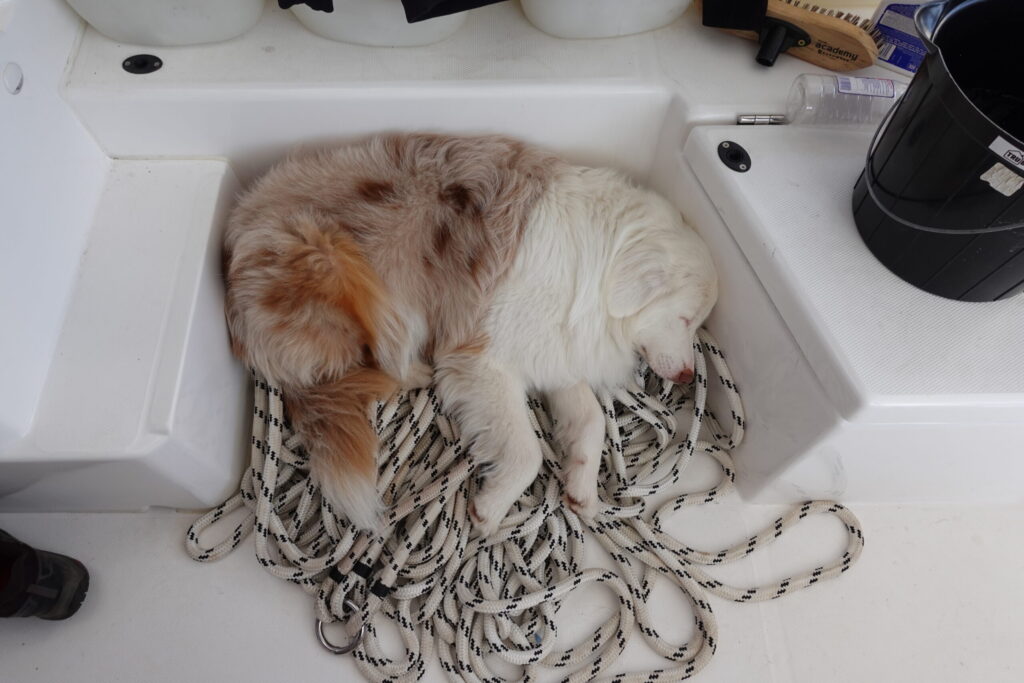
Depending on your pet’s nature and what you do to make them comfortable and happy on the boat, sailing can be very pet friendly. We’ve found that Rose is a true sailing dog at heart, and loves living on the boat; she can swim, is always exploring and running around outdoors, and has her humans around almost full time.
Can you sail anywhere in the world with a cat or dog?#
Unfortunately no, you can’t sail everywhere in the world with a pet. Some places like the Galapagos Islands and Fiji have bans on pets arriving by boat, while others, including Australia, French Polynesia and Japan, are so strict on pet importation that it can be prohibitively expensive, time consuming and very complex to do it.

One of the creators behind Travel Sketch, Telicia lives full-time aboard SV Liger. She’s a freelance writer who’s worked with a range of international companies, and serves as social media coordinator and magazine editor for noforeignland. With the Med and Caribbean done, she’s charting a course through the Pacific and Asia.









Leave a Reply